

How to Introduce a New Cat: 6 Steps to Avoid Fights
How to introduce a new cat without hissing, hiding and fights comes down to one rule: scent first, sight later. Cats recognize each other by smell long before they accept each other by sight, and a rushed first meeting can make two cats enemies for months. This guide on how to introduce a new cat gives you the exact 6-step plan, the signs that tell you when to move forward, and what to do if things go wrong.
Quick Steps: How to Introduce a New Cat
- Before you start: what to prepare
- Step 1: separate rooms (3–7 days)
- Step 2: swap scents
- Step 3: meals at the door
- Step 4: room swap
- Step 5: first look through a barrier
- Step 6: supervised time together
- How long it takes and what to do if they fight
How to Introduce a New Cat: What to Prepare First
The first rule of how to introduce a new cat is to have everything ready before the carrier comes through the door:
- Vet check first. Have the new cat examined and tested for FeLV and FIV, especially if they came from a shelter or the street.
- A separate room with a door. A spare bedroom, office or large bathroom.
- A full set of their own supplies: litter box, food and water bowls, bed, scratching post, hiding spot (a box on its side works).
- Enough litter boxes. One per cat plus one extra, in different places.
- Vertical space. Cat trees and shelves let cats share a room without sharing the floor.
- A cat-safe room. Remove toxic plants, especially lilies. Our list of pet-safe houseplants shows what can stay.
How to Introduce a New Cat in 6 Steps
Each step has a clear “move on when” signal. Don’t follow the calendar, follow the cats.
Step 1. Separate rooms (about 3–7 days)
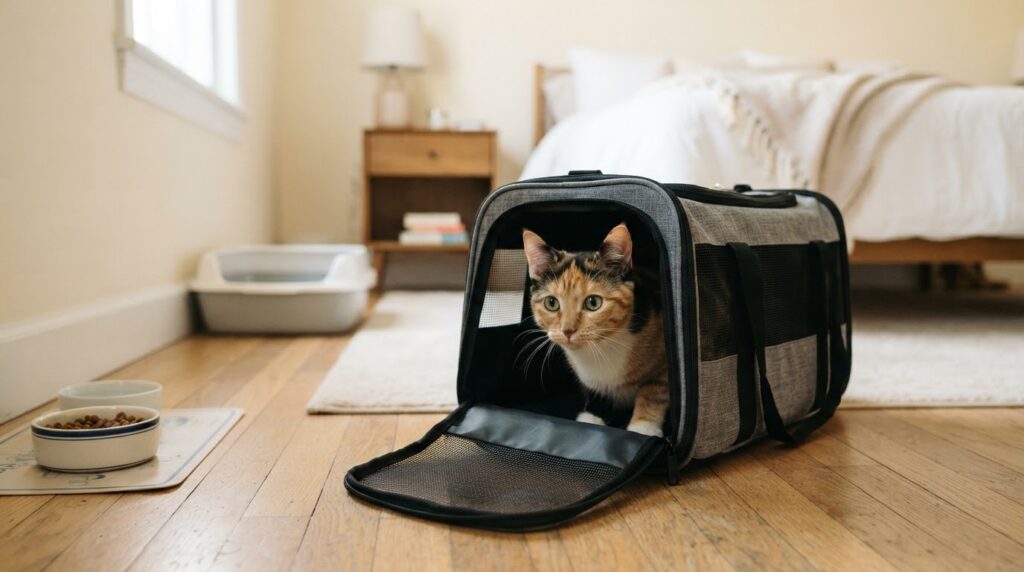
Carry the new cat straight to their room, close the door, open the carrier and leave. No face-to-face contact yet. Keep your resident cat’s routine exactly the same: same meals, same play, same attention.
Move on when: the new cat eats, uses the litter box and comes to greet you.
Step 2. Swap scents
Smell is the heart of how to introduce a new cat. Rub a clean sock on one cat’s cheeks and put it near the other cat’s food bowl. Do the same in reverse. You can also swap their blankets for a few hours.
Move on when: both cats sniff the sock and walk away calmly. Hissing at it means a few more days at this step.
Step 3. Meals at the door
Feed both cats at the same time on opposite sides of the closed door. Start with bowls far enough away that both eat calmly. Move them a little closer every day or two. If one cat stops eating or growls, go back to the last comfortable distance.
Move on when: both cats eat right next to the door.
Step 4. Room swap
Put the resident cat in the new cat’s room for an hour or two and let the newcomer explore the house. Both learn each other’s scent everywhere, still without meeting.
Step 5. First look through a barrier
Use a tall baby gate (or two stacked), or open the door 2–3 inches with doorstops on both sides. Do it at mealtime or during play. Keep it to a few minutes and stop while both are still calm.

Step 6. Supervised time together
Open the door and stay in the room. Keep treats and a wand toy ready: play pulls their attention off each other. Start with 10–15 minutes and make sessions longer each day. Leave the cats alone together only after several calm sessions in a row.
Is It Working? Signs to Watch
Reading body language is half of knowing how to introduce a new cat. Ears, tail and eyes tell you more than any timeline. If you’re unsure what a long look means, see why your cat stares at you.
| Good signs | Normal, slow down | Stop, go back a step |
|---|---|---|
| Sniffing, then walking away | A short hiss or growl | Chasing into a corner |
| Eating near each other | Long staring | Flat ears, puffed tail, lunging |
| Relaxed body, tail up | One cat avoids the other | Yowling or screaming |
| Slow blinking | Swatting without claws | A cat stops eating or hides all day |
| Resting in the same room | Guarding a favorite spot | Peeing outside the litter box |
Going back a step is normal. It’s not failure, it’s how good introductions work.
How Long Does It Take to Introduce a New Cat?
If you’re looking for how to introduce a new cat quickly, the honest answer is that you can’t rush it. Typical timelines:
- 1–2 weeks: a kitten joining a relaxed adult cat.
- 2–4 weeks: two adult cats with similar energy.
- 1–2 months or more: two senior cats, a shy cat meeting a bossy one, or a cat with bad past experiences with other cats.
Mistakes to Avoid
Most problems with how to introduce a new cat come from moving too fast. Avoid these:
- “Let them sort it out.” Cats don’t settle conflicts by fighting. One bad fight can set you back weeks.
- Holding one cat up to the other. A cat in your arms feels trapped and may turn its fear on you.
- Punishing hissing. Hissing is communication. Punishing it teaches your cat that the newcomer means trouble.
- Sharing bowls or litter boxes too early. Keep separate sets until the cats are relaxed together.
If the Cats Fight
- Never reach in with your hands.
- Make a loud noise (clap) or slide a cushion or piece of cardboard between them.
- Put them in separate rooms for several hours. Don’t comfort a cat that is still puffed up.
- Go back to Steps 2–3 for a few days, then try again more slowly.

When to call the vet: if either cat stops eating for more than 24 hours (not eating can quickly cause liver problems in cats), if a fight leaves a bite or scratch (cat bites often get infected), if a cat starts peeing outside the litter box, or if there’s no progress after several weeks. Your vet can rule out pain or illness and refer you to a cat behaviorist.
For more expert advice on how to introduce a new cat, see the guides from Cat Friendly Homes (by feline veterinarians) and Battersea.
How to Introduce a New Cat: Quick Checklist
- Separate room and own supplies for the new cat
- Scent before sight
- Meals at the door, moving closer step by step
- Short meetings through a barrier, then supervised time
- Go back a step at any sign of stress