How Much to Feed a Cat: Calorie Chart by Weight and Age
How much to feed a cat depends on four things: your cat’s ideal weight, age, activity level and the calories in the food you use. As a starting point, a typical indoor adult cat of about 4–5 kg (9–11 lb) needs roughly 190–220 calories a day. That’s about two to three pouches of wet food, or around a quarter to a half cup of dry food, depending on the brand. Below you’ll find a calorie chart by weight, how to convert calories into wet and dry portions, how much kittens and senior cats need, the signs of overfeeding and a safe plan if your cat needs to lose weight.
Quick Picks: How Much to Feed a Cat
- Average indoor cat: about 190–220 calories a day (chart by weight)
- Wet, dry or both: how to turn calories into portions
- Kittens and seniors: feeding by age
- Meals a day: feeding schedule
- Is my cat overfed? signs to check
- Too heavy: safe weight loss plan
How Much to Feed a Cat by Weight
Vets at the Cornell Feline Health Center use a simple formula for an indoor, neutered adult cat: 30 × ideal weight in kg + 70 = calories per day. The key word is ideal. If your cat is overweight, calculate from the weight your vet says it should be, not the current weight.
| Ideal weight | Calories per day (indoor, neutered) | Active or not neutered (+20%) |
|---|---|---|
| 2.5 kg (5.5 lb) | about 145 kcal | about 175 kcal |
| 3 kg (6.6 lb) | about 160 kcal | about 190 kcal |
| 4 kg (8.8 lb) | about 190 kcal | about 230 kcal |
| 5 kg (11 lb) | about 220 kcal | about 265 kcal |
| 6 kg (13.2 lb) | about 250 kcal | about 300 kcal |
| 7 kg (15.4 lb) | about 280 kcal | about 335 kcal |
These numbers show how much to feed a cat as a starting point, not a rule. Two cats of the same weight can need 20–30% different amounts. Feed the chart amount for 3–4 weeks, weigh your cat, then adjust by about 10% up or down.
What Changes How Much to Feed a Cat
- Neutering. After spaying or neutering, a cat’s energy needs drop by around a quarter, while appetite often goes up. This is the most common time cats start gaining weight. Reduce portions slightly from the day of surgery and weigh your cat monthly for the first year.
- Indoor or outdoor. Outdoor cats that roam and hunt burn more. Indoor cats sleep 12–16 hours a day and need less.
- Body type and breed. A muscular Maine Coon needs more than a small, calm cat of the same age. Calm, stocky breeds gain weight easily.
- Pregnancy and nursing. A nursing mother may need two to four times her usual food. Feed kitten food freely and ask your vet.
- Health. Hyperthyroidism, diabetes and kidney disease all change how much a cat eats and needs. A sudden change in appetite is always worth a vet visit.
- Season. According to the UK vet charity PDSA, cold weather alone isn’t a reason to feed indoor cats more.
How Much to Feed a Cat: Wet vs Dry Food Portions
Calories are only useful once you know how many are in your food. Look for “kcal per pouch”, “kcal per can” or “kcal/kg” on the label or the brand’s website. Typical values:
| Food type | Typical calories | Daily amount for a 4 kg cat (190 kcal) |
|---|---|---|
| Wet food pouch, 85 g (3 oz) | 60–100 kcal per pouch | About 2–3 pouches |
| Wet food can, 156 g (5.5 oz) | 130–200 kcal per can | About 1–1.5 cans |
| Dry food (kibble) | 350–450 kcal per 100 g | About 42–55 g (roughly 1/2 cup) |
| Mixed feeding | Half the calories from each | 1 pouch + about 25 g dry food |
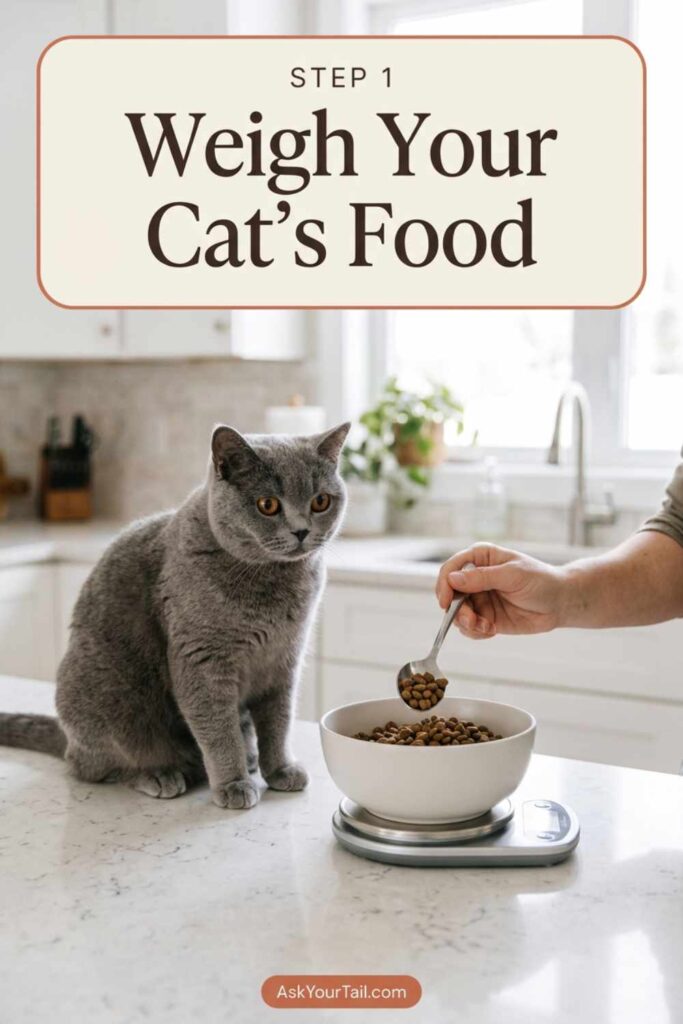
Use a kitchen scale for dry food. A “cup” can mean very different amounts, and a slightly heaped scoop every day adds up to extra pounds within a year. Weigh the daily portion in the morning and take meals from it.
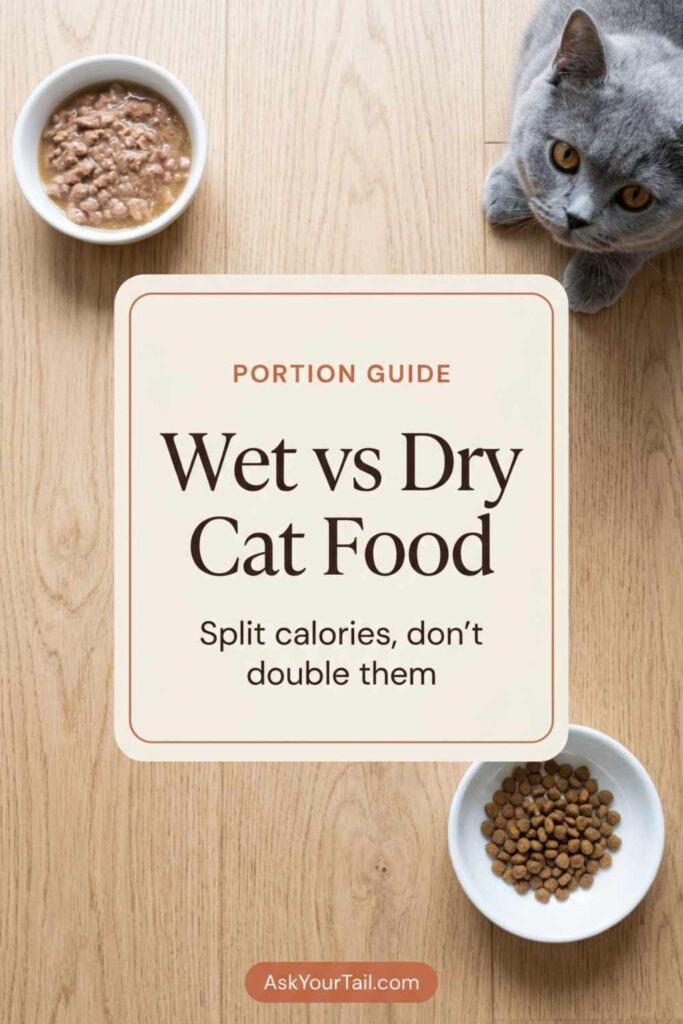
If you mix wet and dry, don’t give the full packet amount of both. Split the daily calories between them, otherwise your cat gets almost double.
Wet food has a bonus: it’s about 75–80% water. Cats naturally drink little, so wet food helps keep them hydrated, which supports kidney and bladder health.
How Much to Feed a Cat by Age
Age changes how much to feed a cat more than anything else, along with how many meals it needs:
| Age | Food | Meals per day | Notes |
|---|---|---|---|
| 8 weeks – 4 months | Kitten food | 4 | Eat as much as they want at each meal; they grow fast |
| 4 – 6 months | Kitten food | 3 | Weigh weekly, the kitten should gain steadily |
| 6 – 12 months | Kitten food | 2–3 | Reduce after neutering; switch to adult food at 12 months |
| 1 – 7 years | Adult food | 2 or more small meals | Chart by ideal weight |
| 7 – 11 years | Adult or senior food | 2 or more | Often less active, watch for weight gain |
| 12 years + | Senior food | 3–4 small meals | Many lose weight and need more calories |
Kittens
Kittens need two to three times more calories per kilogram than adult cats, and their stomachs are tiny. That’s why they need frequent meals of food labeled for growth or “all life stages”. A healthy kitten should never look bony. Don’t put kittens on a diet unless your vet asks you to.
Senior Cats
Middle-aged cats tend to gain weight, but cats over 12 often lose it because they digest fat and protein less well. Unexplained weight loss in an older cat is a reason for a vet check, since it can be a sign of kidney disease, hyperthyroidism or dental pain. Senior cats also scratch less, so check their claws too. Our guide on how to trim cat nails covers older cats.
How Often to Feed Your Cat
Knowing how much to feed a cat is one half. The other is how you split it. In the wild, cats eat many small meals, so dividing the daily amount helps:
- Two meals a day minimum for adult cats, 8–12 hours apart. Three or four smaller meals are even better.
- Free feeding (a full bowl all day) works only for cats that stop when full. Most indoor cats overeat this way.
- Timed feeders help if you’re out all day: they release small measured portions on a schedule.
- Puzzle feeders make your cat “hunt” for kibble. They slow down fast eaters and add activity.
- Several cats? Feed them in separate spots so one doesn’t eat everyone’s food.
Treats and Table Food
- Keep treats under 10% of daily calories. Treats count when you work out how much to feed a cat. For a 4 kg cat that’s only about 20 kcal, often just 5–10 small treats. If you give more, reduce the main meals.
- Count everything: lickable treats, a piece of cheese, a spoonful of yogurt.
- Milk isn’t a cat food. Most adult cats are lactose intolerant and get diarrhea from it.
- Never give onions, garlic, grapes and raisins, chocolate, alcohol, or cooked bones. Watch the holiday table and decorations closely in December; see our christmas tree safety for cats guide.
Signs You’re Overfeeding or Underfeeding Your Cat
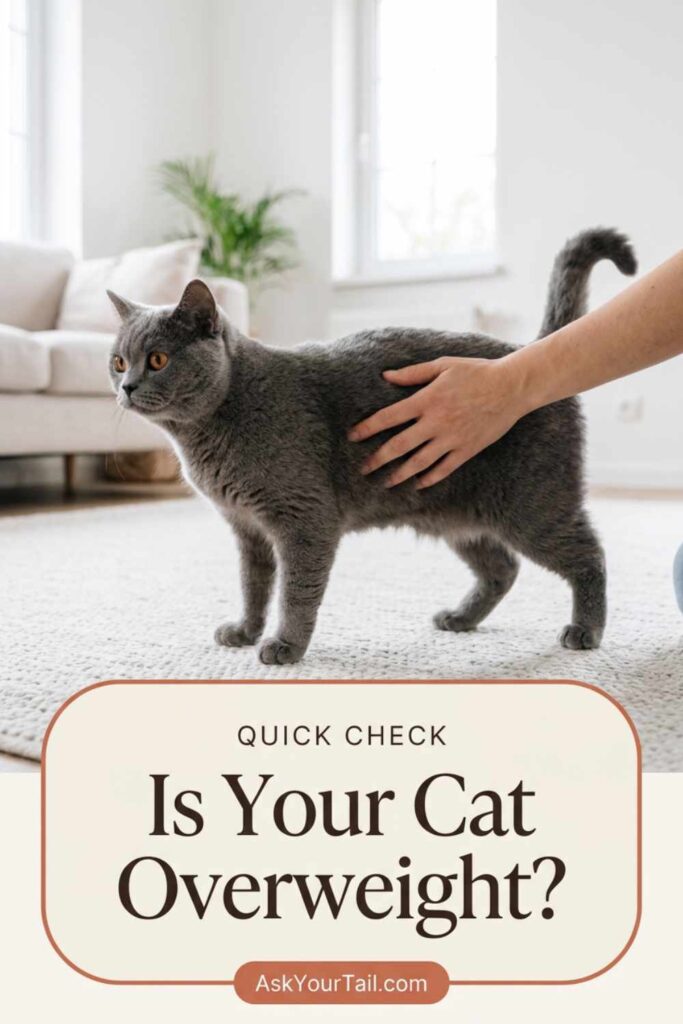
Vet surveys in the US suggest more than half of pet cats are overweight, and most owners don’t notice. The scale and your hands tell you more about how much to feed a cat than the packet does. Check your cat’s body every month:
| Check | Underweight | Ideal | Overweight |
|---|---|---|---|
| Ribs | Easy to see | Easy to feel with a thin fat layer | Hard to feel under fat |
| Waist (from above) | Very narrow, hip bones show | Visible waist behind the ribs | No waist, round or oval shape |
| Belly (from the side) | Tucked up sharply | Slight tuck | Belly hangs or bulges |
| Grooming | Coat dull | Reaches everywhere | Can’t groom the lower back, greasy fur there |
Good to know: many cats have a loose flap of skin on the lower belly, called the primordial pouch. It swings when they walk and is normal, even in slim cats. Judge by ribs and waist, not by the pouch.
Other signs of overfeeding: vomiting soon after meals, weight going up on the monthly weigh-in, and less interest in play. Constant begging is not a sign of hunger by itself. Many cats beg out of habit because begging gets attention or a treat.
How Much to Feed a Cat That Needs to Lose Weight
Extra weight raises a cat’s risk of diabetes, arthritis and urinary problems. But cats must lose weight slowly. A fast diet or a cat that stops eating for a few days can develop hepatic lipidosis (fatty liver), which is life-threatening.
- See your vet first to confirm the ideal weight and rule out health problems.
- Calculate calories for the ideal weight with the chart above. For weight loss, Cornell vets suggest feeding about 70–80% of that number. Example: a cat whose ideal weight is 5 kg gets about 155–175 kcal a day instead of 220.
- Weigh every portion and stop free feeding.
- Cut treats, not meals. Use a few kibbles from the daily portion as treats.
- Add play: two or three 10-minute sessions with a wand toy a day.
- Weigh your cat every 2 weeks. A safe pace is about 1% of body weight per week, roughly 50 g (2 oz) for a 5 kg cat.

When to Call the Vet
If your cat’s appetite suddenly changes, the question isn’t how much to feed a cat anymore. Call your vet if you notice:
- Your cat hasn’t eaten for 24 hours (for kittens, sooner)
- Sudden weight loss or gain without a change in food
- Eating much more than usual but losing weight
- Drinking and urinating a lot more
- Vomiting more than once a week, or diarrhea lasting over a day
- Dropping food or chewing on one side (often dental pain)
How Much to Feed a Cat: FAQ
How many pouches of wet food should a cat eat a day?
Most average indoor cats eat 2–3 standard 85 g pouches a day if they get only wet food. Check the calories on your brand: some pouches have 60 kcal, others 100.
How much dry food should a cat eat a day?
Usually 40–60 g (about 1/3 to 1/2 cup) for an average indoor cat on dry food only. Weigh it rather than using a cup, and subtract any wet food or treats.
Should I follow the feeding guide on the bag?
Use it as a starting point. Packet guides are often generous and are made for active cats. For neutered indoor cats, start at the lower end and adjust by weight.
Why is my cat always hungry?
Often it’s habit or boredom. Try more, smaller meals and puzzle feeders. If your cat eats a lot and still loses weight, see your vet to check for hyperthyroidism, diabetes or worms.
How much to feed a cat after neutering?
Around 20–25% less than before surgery, or switch to a food for neutered cats. Weigh your cat monthly and adjust if the weight goes up.
How Much to Feed a Cat: Quick Checklist
- Daily calories found by ideal weight (30 × kg + 70)
- Calories per pouch or per 100 g checked on the label
- Daily portion weighed on a kitchen scale
- Wet and dry split, not doubled
- At least 2 meals a day, kittens 3–4
- Treats under 10% of calories
- Ribs and waist checked monthly
- Portion adjusted by 10% when weight changes
Now you know how much to feed a cat: start from the ideal weight, measure every portion and let monthly weigh-ins guide you. A few minutes with a scale now saves your cat from weight problems later.
📚 Sources and further reading