Winter Paw Care for Dogs: How to Protect Paws From Salt, Ice and Snow
Winter paw care for dogs matters more than most owners think. In one walk your dog’s feet can meet road salt, chemical ice melt, sharp ice, freezing snow and, back home, dry heated air. The result is cracked pads, red skin between the toes, limping and a dog that licks its feet all evening. The good news: a 2-minute routine before and after walks prevents most of it. Below: what actually hurts paws in winter, how to protect them, how to wipe them properly, how to treat cracked pads at home, and when it’s time to see the vet.
Quick Picks: Winter Paw Care for Dogs
- Biggest danger: road salt and ice melt (why)
- Before the walk: trim, balm or boots
- Boots: how to get your dog to wear them
- After the walk: the 4-step wipe routine
- Cracked pads: problem table and home care
- Emergency: when to call the vet
Why Winter Paw Care for Dogs Is So Important
Paw pads are tough, but they aren’t made for chemicals and constant freezing and thawing. These are the main winter threats:
- Road salt and ice melt. Rock salt and calcium chloride dry out pads, sting tiny cracks and can cause chemical burns. When your dog licks its feet later, it swallows them, which can cause vomiting and drooling.
- Snowballs between the toes. Snow sticks to long fur, freezes into hard ice balls and pulls on the skin with every step.
- Sharp ice and frozen ground. Crusty snow and ice edges can cut pads like glass.
- Dry indoor heat. Going from wet cold outside to dry warm air inside makes pads crack, the same way your hands do.
- Antifreeze. It drips in driveways and parking lots, tastes sweet and is deadly even in small amounts if licked off the feet.
- Frostbite. Toes and pads are among the first places to freeze in very cold weather.
Signs your dog needs better winter paw care
Watch for these, and step up winter paw care for dogs if you see any: licking or chewing the feet after walks, limping or lifting a paw, red or brown-stained fur between the toes, dry or rough pads, visible cracks, bleeding, swelling, or a dog that suddenly refuses to walk on certain surfaces.
Winter Paw Care for Dogs Before the Walk
- Trim the fur between the pads so it’s level with the pads, not sticking out. Less fur means fewer ice balls and less salt trapped on the skin. Use small round-tip scissors or a quiet trimmer, and ask a groomer if your dog won’t sit still.
- Keep nails short. Long nails spread the toes apart, letting more snow and salt in, and make slipping on ice more likely.
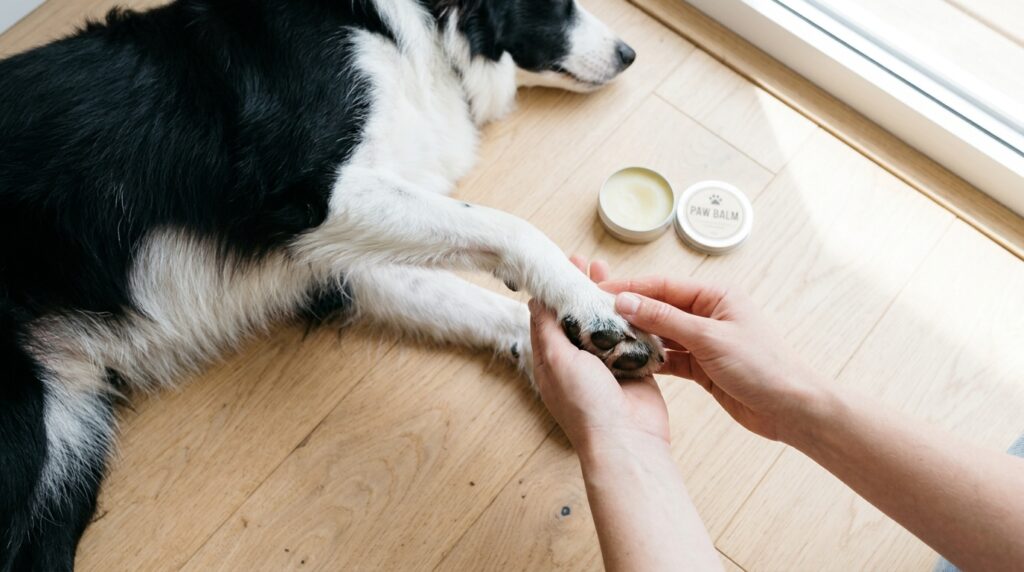
- Apply a paw wax or balm made for dogs. A thin layer creates a barrier between pads and salt. Rub it in well so it doesn’t attract dirt.
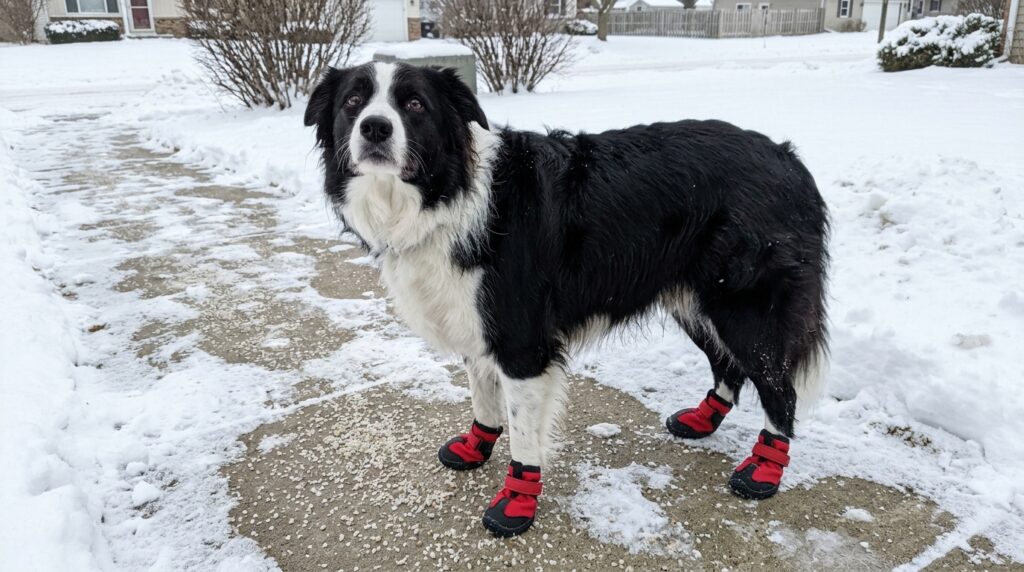
- Use boots on heavily salted streets, for dogs with sensitive or already cracked pads, and in deep cold.
Skip human hand creams. Some contain zinc oxide, essential oils or other ingredients that are harmful when your dog licks them off. Good winter paw care for dogs uses products labeled safe for dogs.
Boots in Winter Paw Care for Dogs: How to Get Your Dog to Wear Them
Almost every dog does the “high-step dance” the first time it wears boots. That’s normal. Most dogs get used to them in a week with this approach:
- Day 1–2: let your dog sniff the boots, give a treat. Put one boot on for a few seconds, treat, take it off.
- Day 3–4: all four boots on indoors for 2–5 minutes while you play or feed treats.
- Day 5–7: short walks outside. Moving forward distracts the dog from the boots.
Fit tips: measure the front paw while your dog is standing, since paws spread under weight. Front and back paws are often different sizes. The boot should stay on when your dog shakes but not leave marks on the leg. Choose a flexible, grippy sole.
Winter Paw Care for Dogs During the Walk
- Walk on clean snow or grass instead of salted sidewalks when you can.
- Avoid puddles in parking lots and driveways. That’s where salt water and antifreeze collect.
- Stop if your dog limps or lifts a paw. Check for an ice ball or a sharp piece of ice and remove it.
- Keep walks shorter in deep cold. See how long is safe in our guide on how to keep dogs warm in winter.
Winter Paw Care for Dogs After the Walk: The 4-Step Wipe
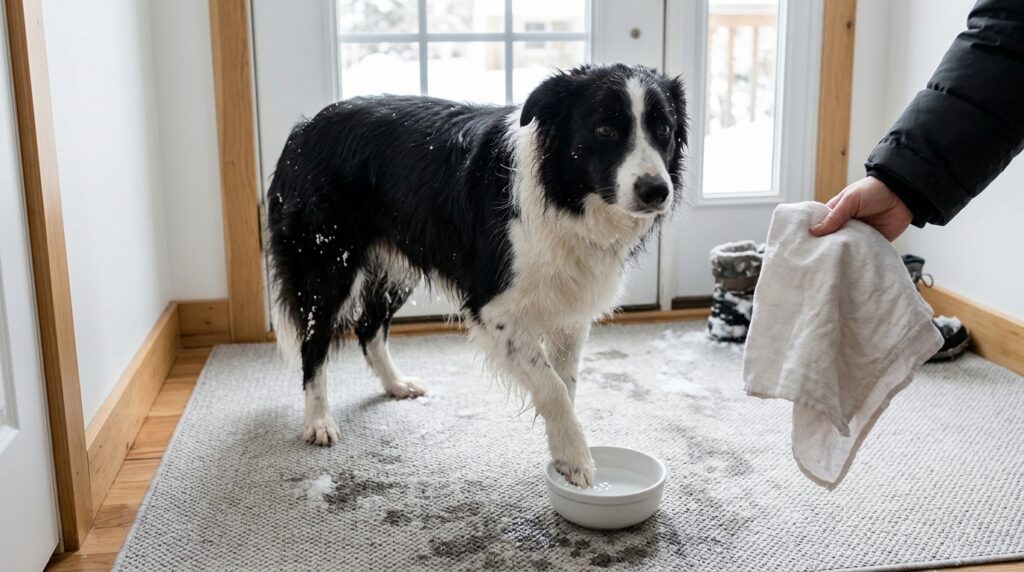
This is the most important part of winter paw care for dogs. Keep a towel and a bowl at the door so it becomes a habit.
- Rinse. Dip each paw in a bowl of lukewarm (not hot) water, or wipe with a damp cloth. Hot water on cold paws hurts and dries the skin.
- Clean between the toes. Spread the toes gently. Salt and ice hide there.
- Dry completely, including between the toes. Damp fur leads to irritation and yeast.
- Check and moisturize. Look for cuts, cracks and redness, then apply a thin layer of dog paw balm on dry pads.
Wipe the belly and legs too if your dog walked through slush. That’s where salt splashes, and dogs lick it off.
Common Winter Paw Problems and What to Do
Even with good winter paw care for dogs, small problems happen. Here’s how to tell what you’re looking at and how serious it is.
| Problem | What it looks like | Home care | See the vet if |
|---|---|---|---|
| Dry, cracked pads | Rough, hard pads with small splits | Wipe after walks, dog balm twice a day, boots outside | Cracks are deep, bleed or don’t improve in 5–7 days |
| Salt or ice melt burn | Red, sore skin, licking, limping | Rinse with lukewarm water, dry, keep your dog from licking | Blisters, open sores, or vomiting and drooling after licking |
| Ice balls | Lumps of ice stuck in the fur between toes | Melt with lukewarm water, never pull; trim the fur | The skin underneath is torn or raw |
| Cut from ice | Bleeding pad, limping | Rinse, press with clean gauze until it stops, cover with a sock | Deep or long cut, bleeding over 10 minutes, any limp next day |
| Frostbite | Pale, grey or hard skin on toes or pads | Warm slowly with lukewarm water, don’t rub | Always, the same day |
How to treat cracked paw pads at home
- Wash the paw with lukewarm water and a little mild, unscented soap, rinse well and dry.
- Apply a dog paw balm, best right before a nap or bedtime so it soaks in.
- Put a clean cotton sock over the paw for 15–20 minutes, or distract your dog with a chew so it doesn’t lick the balm off.
- Use boots on walks until the cracks heal, usually 1–2 weeks.
Pet-Safe Ice Melt at Home
You can’t control the city’s sidewalks, but you can control your own steps and driveway, and that’s part of winter paw care for dogs too.
- Choose an ice melt labeled pet-safe. “Pet-safe” means gentler, not harmless, so still wipe paws after walks.
- Avoid rock salt (sodium chloride) and calcium chloride where your dog walks every day.
- Use sand or non-clumping kitty litter for grip on icy steps. They don’t melt ice, but they stop slipping and don’t burn paws.
- Store all ice melt bags closed and out of reach. Eating it straight from the bag is far more dangerous than walking on it.
The American Kennel Club explains which ice melt ingredients are gentler on dogs, and the ASPCA’s cold weather tips cover other winter poisons.
When Winter Paw Care for Dogs Needs a Vet
When to call the vet: deep cracks or cuts, bleeding that doesn’t stop in 10 minutes, swelling, pus or a bad smell, a limp that lasts more than a day, skin that stays pale, grey, hard or turns black (frostbite), or vomiting and drooling after your dog licked salty paws. Call right away if you think your dog licked antifreeze, even if it seems fine.
Winter Paw Care for Dogs: FAQ
Is road salt bad for dog paws?
Yes. It dries and cracks pads, stings existing cuts and can cause chemical burns. Licking it off can upset the stomach. Wiping paws after every walk solves most of the problem.
Can I put Vaseline on my dog’s paws?
A thin layer of plain petroleum jelly before a walk works as a short-term barrier, but most dogs lick it off, and it can cause loose stool if eaten. A dog paw wax absorbs better and is made to be licked.
Is coconut oil good for dog paws?
A small amount can soften mildly dry pads and is safe if licked in small amounts. It doesn’t protect against salt as well as a wax, and too much can cause an upset stomach or a greasy floor.
Do all dogs need boots in winter?
No. If your dog walks mostly on snow and grass and you wipe paws after walks, a balm is often enough. Boots make the most sense on salted city streets, for dogs with cracked pads, and in very low temperatures.
Why does my dog lick its paws so much in winter?
Usually because of salt residue, dry itchy skin or a small crack. Wipe and dry paws after walks and moisturize. If licking continues, the skin is red or it smells, see your vet to rule out an infection or allergy.
Winter Paw Care for Dogs: Quick Checklist
- Fur between the pads trimmed, nails short
- Dog paw wax before walks, or boots on salted streets
- Clean snow and grass instead of salted sidewalks
- Towel and bowl of lukewarm water at the door
- Paws rinsed, dried between the toes and checked after every walk
- Balm on dry pads at bedtime
- Pet-safe ice melt or sand at home, bags out of reach
- Vet called for deep cracks, burns, frostbite or antifreeze
Winter paw care for dogs takes about two minutes a walk, and it saves your dog weeks of sore, cracked feet. Trim, protect, wipe, check, and your dog can enjoy the snow all season.