How to Brush a Dog’s Teeth: A Step-by-Step Guide for Beginners
How to brush a dog’s teeth is one of the most useful things you can learn as an owner, and one of the most skipped. According to the American Veterinary Medical Association, most dogs show signs of gum disease by age three, yet only a tiny share of owners brush their dog’s teeth at all. Brushing takes about two minutes, costs almost nothing and can save your dog from pain, tooth loss and expensive dental work. Below: what you need, how to get your dog used to it in two weeks, a 7-step brushing method, what to do if your dog won’t cooperate, and which chews actually help.
Quick Picks: How to Brush a Dog’s Teeth
- How often: daily is best, 3 times a week minimum (why it matters)
- Supplies: dog toothpaste only, never human
- First time: the 2-week training plan
- The method: 7 easy steps
- Dog won’t let you? what to do
- Chews and gels: what helps, what’s risky
Why Learn How to Brush a Dog’s Teeth?
After every meal, a soft film of bacteria called plaque builds up on the teeth. Within a few days it hardens into tartar, the brown crust you see near the gums. Tartar can’t be brushed off. Under it, bacteria inflame the gums, and over time the tissue that holds teeth in place breaks down. The result is bad breath, bleeding gums, loose teeth and pain that dogs are very good at hiding.
Brushing removes plaque before it turns into tartar. When it comes to how to brush a dog’s teeth, frequency matters more than technique:
| How often you brush | What it does |
|---|---|
| Every day | The gold standard. Removes plaque before it hardens |
| 3–4 times a week | Good. Noticeably slows tartar buildup |
| Once a week | Better than nothing, but plaque has time to harden |
| Only before vet visits | Little effect on dental disease |
Small breeds and flat-faced dogs (Chihuahuas, Yorkies, Pugs, Cavaliers, Dachshunds) have crowded teeth and are especially prone to dental disease. For them, daily brushing is worth the effort.
How to Brush a Dog’s Teeth: What You Need
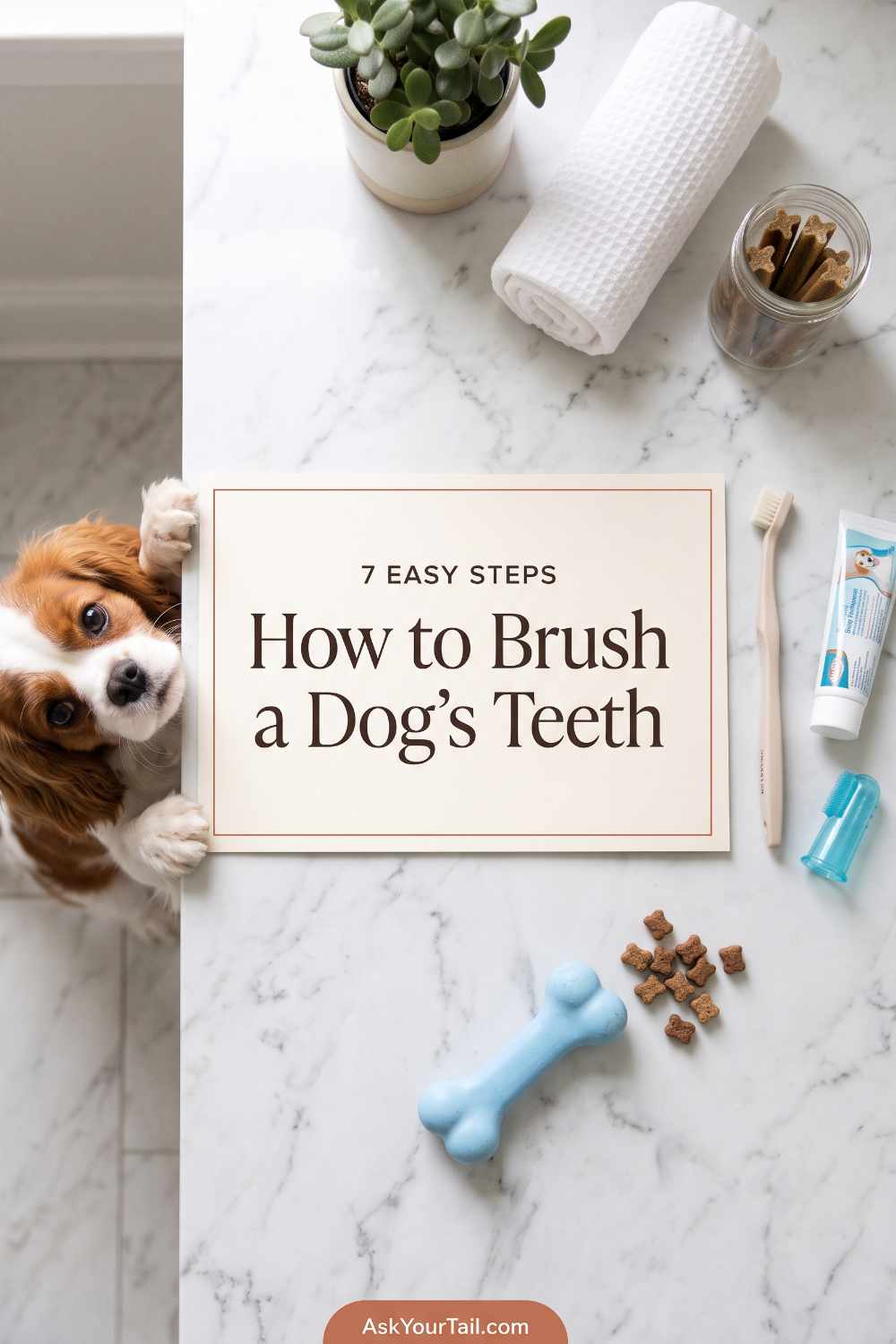
- Dog toothpaste. It comes in flavors dogs like, such as chicken, beef or peanut butter, and is safe to swallow. Dogs can’t rinse and spit.
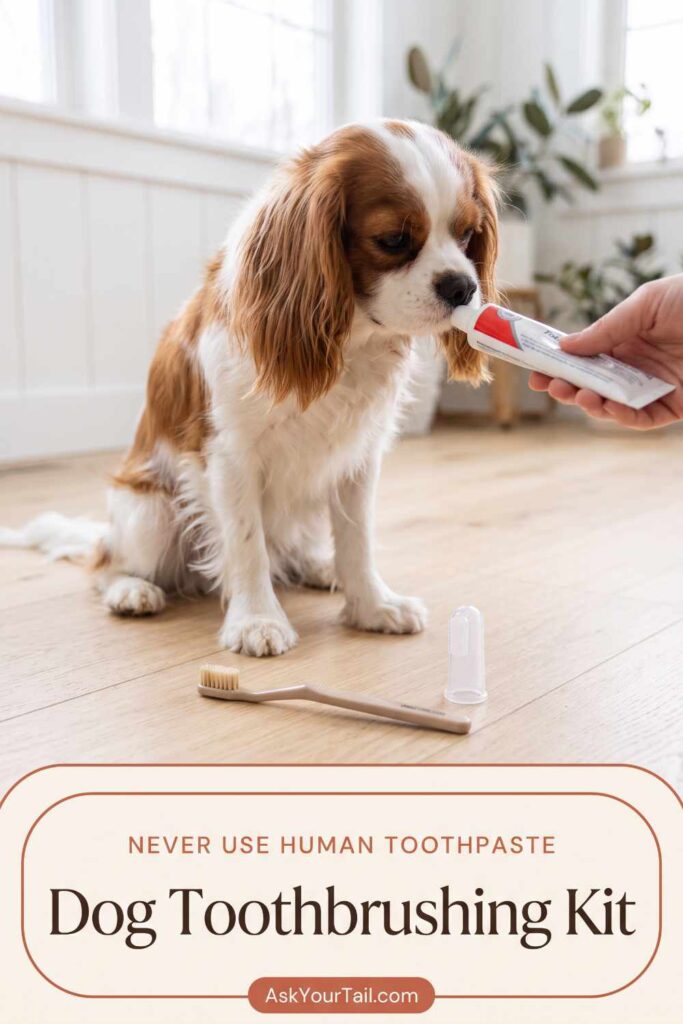
- Never human toothpaste. It often contains xylitol, a sweetener that is toxic to dogs, plus fluoride and foaming agents that aren’t meant to be swallowed. Baking soda and salt aren’t good options either.
- A soft toothbrush. A dog toothbrush with an angled head, or a soft child’s toothbrush for small dogs. A finger brush is easier for beginners and puppies, though it reaches less well.
- Treats or praise for after each session.
- Good light so you can see the gum line.
The right tools make learning how to brush a dog’s teeth much easier. Replace the toothbrush every 3 months or when the bristles splay, and use a separate brush for each dog.
How to Get Your Dog Used to Brushing: 2-Week Plan
The UK charity Blue Cross notes that most dogs need a couple of weeks to accept brushing, and older dogs may need longer. Go step by step, a minute or two a day, always ending with praise. Move to the next stage only when your dog is relaxed with the current one.
| Days | What to do |
|---|---|
| 1–2 | Gently stroke your dog’s cheeks and lift the lip for a second. Praise. |
| 3–4 | Let your dog lick a little dog toothpaste off your finger. Most dogs love it. |
| 5–7 | Rub your toothpaste-covered finger along the outer gums and teeth for a few seconds. |
| 8–10 | Let your dog lick toothpaste off the brush. Then touch a few front teeth with it. |
| 11–14 | Brush the front teeth and canines, then add the back teeth a few seconds at a time. |
This slow start is the real secret of how to brush a dog’s teeth without a struggle. Choose a calm moment, like after a walk, and the same time each day. Dogs accept routines faster.
How to Brush a Dog’s Teeth in 7 Steps
Once your dog is comfortable, here’s how to brush a dog’s teeth properly:
- Get in position. Sit beside your dog, not in front of it. Facing a dog head-on can feel threatening. Small dogs can sit on your lap.
- Put a pea-sized amount of toothpaste on the brush and press it into the bristles so it doesn’t fall off.
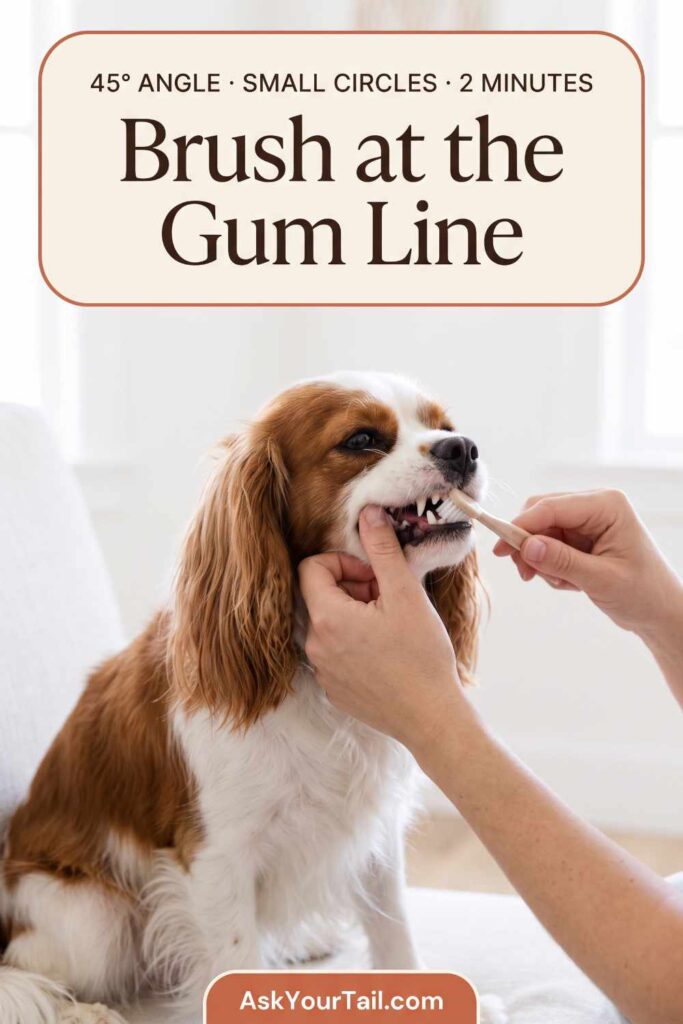
- Lift the lip on one side with your thumb. You don’t need to open the mouth: the outer surfaces matter most.
- Hold the brush at a 45° angle to the gum line, bristles pointing slightly up toward the gums on the upper teeth and down on the lower ones.
- Brush in small circles with gentle pressure, working from the front teeth to the back. Spend extra time on the canines and the big back teeth (upper premolars and molars). That’s where tartar builds up fastest.
- Switch sides. About 30 seconds per side for the upper and lower teeth, about 2 minutes in total. The inner surfaces are optional: the tongue keeps them cleaner.
- Finish with a reward. Praise, a short game or a favorite walk. No need to rinse.
A little pink on the brush in the first days can happen if the gums are already inflamed. If the bleeding is more than a little, or continues after a week of gentle brushing, see your vet.
What If Your Dog Won’t Let You Brush?
Even owners who know how to brush a dog’s teeth meet dogs that refuse. Try this:
- Go back a step. If your dog pulls away, return to the last stage of the training plan it was happy with.
- Brush less, more often. One side today, the other tomorrow, is better than a fight.
- Try a different tool. Some dogs accept a finger brush or a piece of gauze around your finger more easily than a toothbrush.
- Change the flavor of the toothpaste. Some dogs simply dislike one taste.
- Choose the right moment: a tired dog after a long walk is the easiest patient.
- Never force or hold the mouth shut. It makes every next session harder and risks a bite.
- Check for pain. A dog that suddenly hates having its mouth touched may have a sore tooth. Ask your vet to look.
Mouth handling is easier when your dog is used to being touched all over. The same calm, step-by-step approach helps with baths, too. See how often should you bathe a dog.
How to Brush a Dog’s Teeth: Puppies and Senior Dogs
Puppies
Start the training plan as soon as your puppy comes home, from about 8 weeks old. Puppies accept new routines much more easily than adult dogs. Between about 3 and 7 months puppies lose their baby teeth and the gums can be sore, so use a finger brush and a light touch during teething. The goal at this age is a puppy that thinks tooth time is fun.
Senior Dogs
It’s never too late to start, but older dogs often already have tartar and sore gums. Book a vet check first. If your dog needs a professional cleaning, start brushing after it, on clean teeth. Go slowly and gently, and watch for loose or broken teeth.
Dental Chews, Gels and Water Additives
Extras can help, but none of them replace knowing how to brush a dog’s teeth and doing it regularly:
| Product | How much it helps | Watch out for |
|---|---|---|
| Dental chews | Some help, especially those with the VOHC seal (Veterinary Oral Health Council) | Calories: count them in the daily food. Pick the right size to avoid choking |
| Dental diets | Some help when they are the main food | Only work if fed daily |
| Gels and sprays | A little, good for dogs that refuse brushing | Dog products only |
| Water additives | A little | Some dogs drink less, so watch water intake |
| Very hard chews (bones, antlers, hooves, hard nylon) | Not recommended | Can break the big back teeth |
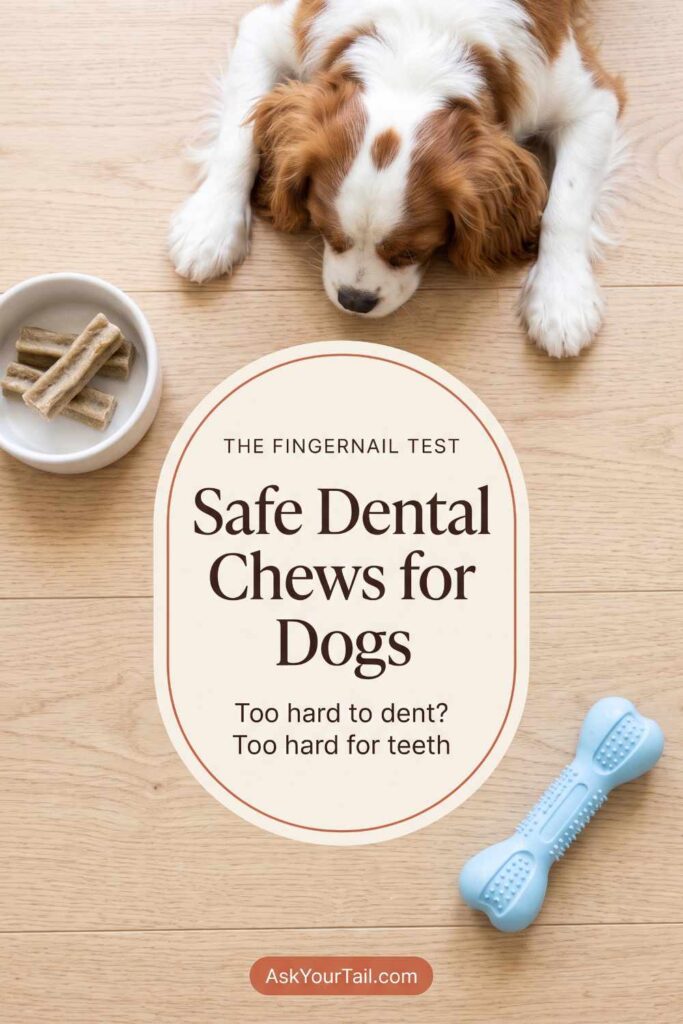
The fingernail test: if you can’t press a dent into a chew with your fingernail, it’s too hard for your dog’s teeth. Cooked bones are dangerous for another reason: they splinter. Keep that in mind at holiday meals, too. See can dogs eat turkey.
Signs of Dental Problems: When to See the Vet
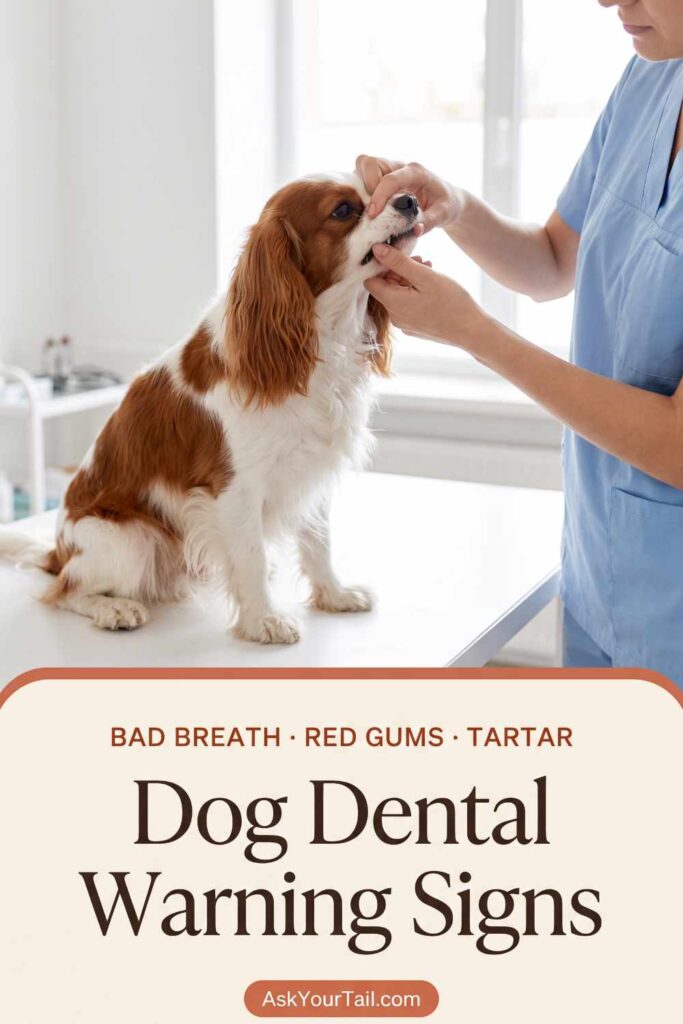
Knowing how to brush a dog’s teeth prevents problems, but brushing can’t fix existing tartar or infection. Book a vet visit if you notice:
- Bad breath that doesn’t go away
- Yellow or brown tartar along the gum line
- Red, swollen or bleeding gums
- Loose, broken or discolored teeth
- Chewing on one side, dropping food or eating less
- Drooling, pawing at the mouth or swelling on the face
Vets recommend a dental check at least once a year, more often for small breeds. Tartar is removed with a professional cleaning under anesthesia, which allows the vet to clean below the gum line and take X-rays. “Anesthesia-free” cleanings only scrape the visible surface and can hide disease underneath.
How to Brush a Dog’s Teeth: FAQ
Can I brush my dog’s teeth without toothpaste?
Yes. The brushing itself removes plaque. Dog toothpaste mainly makes it tastier and adds mild cleaning. Plain water on the brush is fine, but never use human toothpaste.
Is it too late to start brushing an older dog’s teeth?
No. Get a vet check first, treat any painful teeth, then start the 2-week plan. Older dogs learn too, just a little slower.
Can I use a finger brush instead of a toothbrush?
Yes, especially at the start and for small dogs. A toothbrush with bristles cleans the gum line better, so many owners switch once the dog is used to it.
Do dental chews replace brushing?
No. Chews clean mostly the tips of the teeth. Brushing is what reaches the gum line, where dental disease starts.
How long does it take to brush a dog’s teeth?
About 2 minutes once your dog is used to it: 30 seconds for each side of the upper and lower jaw.
How to Brush a Dog’s Teeth: Quick Checklist
- Dog toothpaste and a soft brush ready, no human toothpaste
- 2-week training plan done step by step
- Lip lifted, brush at 45° to the gum line
- Small circles, extra time on canines and back teeth
- About 2 minutes, daily or at least 3 times a week
- Reward after every session
- No very hard chews or cooked bones
- Vet dental check once a year
Now you know how to brush a dog’s teeth: start slow, keep it short and make it a daily habit. Two minutes a day keeps your dog’s breath fresh, its gums healthy and its teeth where they belong.
📚 Sources and further reading